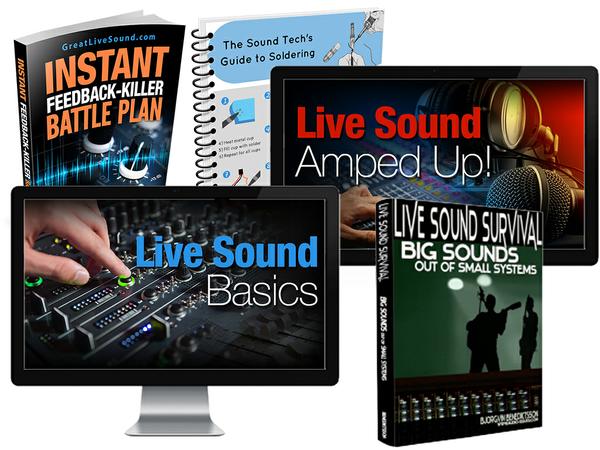
James and I are really excited about the reception our new live course has gotten in the last week. It really fleshes out my past live sound eBook with fresh new content and video training that I believe any up and coming live sound engineer will benefit from.
In case you're still on the fence about picking up the course, let us answer some questions about the course we
know you might have.
Q: What will I learn in this course?
A: The training videos and bonus guides provide a solid introduction to live sound and teach you the most important concepts so you can start getting better quality sound - fast. You’ll learn some pro tips of what to do (and what not to do), as well as some important tricks to help sweeten up your
sound.
Q: How can I know if this will help me get better sound?
A: As with most things, it’s the simple things that can make or break the quality of your sound. The problem is that there can be a lot of little things when you run live sound.
Because “the show must go on”, you don’t always have a lot of time to search online
and research answers all day. This course teaches you the most important “little things” that will make a difference in the sound quality of your mix. You’ll learn how to use the right cable for the right job, how to properly set gain, two techniques to dial in your EQ (even if you don’t know what you’re really doing), and several other pro tips that sound engineers use to get professional sounding mixes.
Q: Is this a
“technical" course? Do I have to learn equations and do math?
A: No. This is not a course on physics or the calculus of sound. You won’t have to memorize any equations or learn any fancy jargon. Sure, you should know that dB stands for decibel, but you don’t need a calculator to take this course. You’ll be learning real-world, application-based concepts for all live sound applications.
Q: What type of live sound venue is this best for?
A: You can use the tools in this course to get great sound at just about any live sound venue. The fundamentals of getting great sound don’t change. Sure, there are different techniques and tricks to use for mixing different styles of music or other acts like drama, musicals, and other special events. But you’ll learn the practical info you need for any live sound
event in this course.
Q: I’m a beginner. Is this course for me?
A: This is the perfect course for new sound techs and those that want to work in live sound production. Stage hands, volunteers, lighting techs, stage managers, and venue operators will even learn a thing or two that can help them better understand live sound and what it’s like to actually pull off a good
mix.
Q: I’ve got some experience and feel like I know a lot about live sound already. Is there anything I’ll learn from this course?
A: If you’re in a leadership position or manage one or more sound techs, this course will be very helpful for you and will provide you with great information to pass along to others. And remember, no one knows everything. Even “experts" can
learn new tricks and tips!
Q: I’m super busy. This isn’t going to waste my time is it?
A: The two training videos are designed to deliver the maximum amount of information in the shortest time possible. The bonus training material is easy to skim and can be used as a reference when you need it. As with skill, it is important to dedicate time to learning and practicing
- but you don’t need to waste time listening to boring physics or geek-speak with this course.
Q: I have a home studio and already know how to get good recordings. Why will this help me get better at live sound?
A: Mixing for the studio and mixing for the stage are two different things. Many of the concepts about sound and crafting a mix are the same, but live sound
requires more immediate attention to detail before and during the event. There is no “fix it in the mix” for live sound. It works, or it doesn’t. You get one shot. This course will even help you if you want to do more live on-location recordings.
Q: Can you show me how to use my new mixing console?
A: This is not a course about specific equipment or electronics.
However, the concepts we cover in the course are useful for every live sound application. It doesn’t matter if you run an analog or a digital mixing console - you’ll learn the most important information that can make your mix sound great.
Q: Who is this NOT for?
A: This course is definitely not for you IF you think you already know everything you need to know about live
sound and you already know how to pass along that info to someone else.
Q: How is this different form some of the other sound training videos out there?
A: The two training videos and bonus material is the result of over 20 years of experience setting up, mixing, and teaching others how to use live sound systems. This isn’t a “talking head” video with a bunch of boring
stories or tangents that don’t make sense. You’ll quickly learn the most important concepts that will help make your mix sound great.
Q: How will this training material affect the quality of my next mix?
A: The live sound tip about EQ that is included in this course is priceless. Really. If you learn and practice that one thing, it has the power to completely turn your mix
around. This tip will help you find the perfect “sweet spot” for difficult instruments and it will help you stop feedback super fast. There are many other great tips about loudspeaker placement, sound design, and building a solid mix. If you apply this information properly (don’t worry, it’s pretty easy), you should be able to hear the results of this training material in your next mix.
You'll get two in-depth tutorial videos that teach you everything you need to get up and running, in addition to a bunch of bonuses to tackle common live sound
problems.