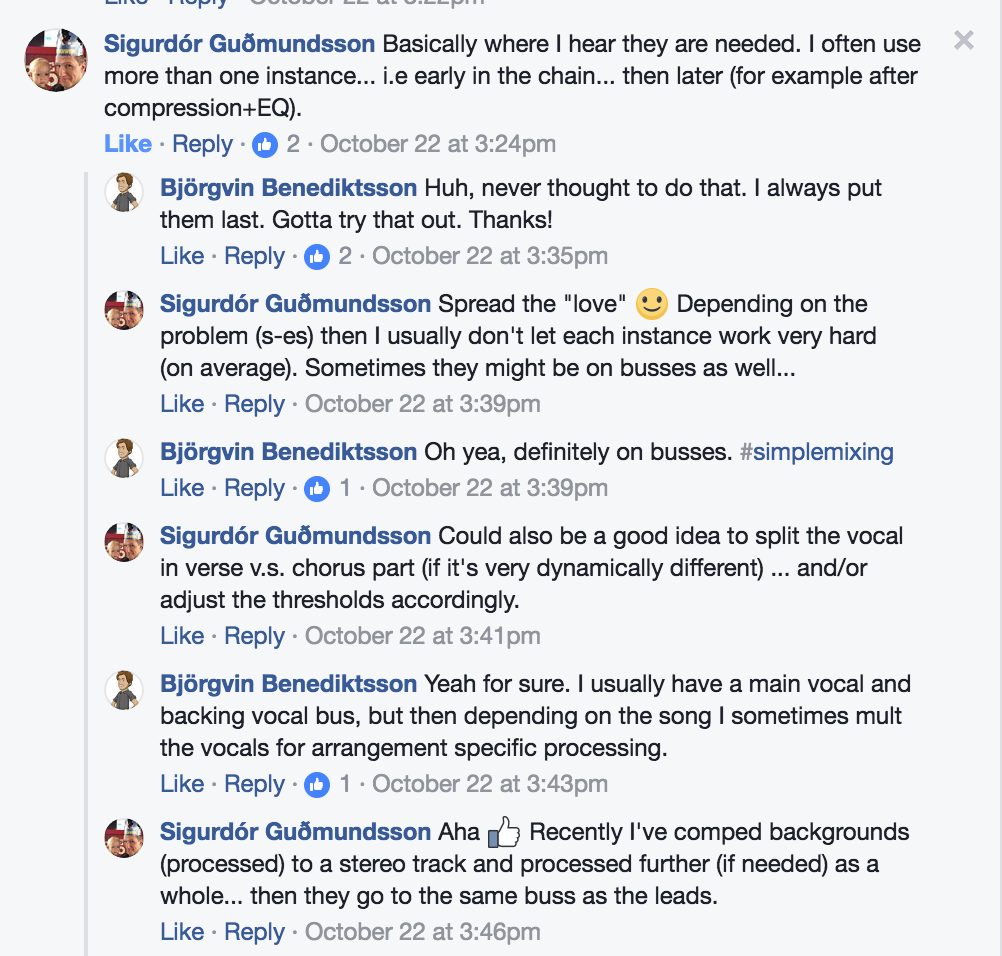
If you want to know exactly what a de-esser really does, and how you can actually create one with an EQ and a compressor, I wrote this article 7 years ago: How to Create a De-Esser from Scratch.
Since a de-esser is basically a frequency dependent compressor it makes total sense to think of them the same way. I use serial compression a lot, with multiple types of compressors compressing a couple dBs at a time.
In
fact, I do just that in the compression module in the Mixing With 5 Plug-ins course, using both an 1176 style FET compressor for the peaks and then a slower LA2A opto style for general leveling.
If you'd like to get better mixes using only 5 plug-ins, check out the course here.
P.S.
Tomorrow is the one-year anniversary of The Long Wait's debut album, a band I am very proud to have been a member of. Although the band is no longer, I'm still proud of the production and mixing work I did on it. The reason I mention it is that Sigurdór Guðmundsson, the De-Esser Wizard above, played bass on track
#9, "Dispute."
It's a small world when you're an Icelander...
Cheers,
Björgvin