Mixing is easy if you have an idea of what you're trying to accomplish.
Jumping from one thing to another without a plan? Not easy. Following a system that helps you make better sounding mixes? Easy.
You see, going from one action to another is pure chaos. You might start out doing levels, then switch to panning and then think about some distortion tips you want to try.
Then all of a sudden you don't really know where your mix is going.
I like structure when working, so it's good for me to have some sort of work flow when mixing.
Instead of bouncing from one technique to another, follow these tips here below and you'll be well on your way to that mix that's in your head.
The 5 things below are the typical 20% of things that will
get you really close to your ideal mix.
- Volume - You need to keep instruments and the elements in the mix at a steady and balanced level, without abnormal level changes popping out all over the place. Pushing up the faders and getting a balanced mix is the first order of business after you've recorded and edited your tracks.
- Panning - If you have all sorts of different elements and instruments, you need to find a place for them in the stereo spectrum. Pan everything around until you've found a good balance.
- EQ - Equalization is an incredible useful tool for enhancing the sonic colors of your instruments. Cutting out unwanted frequencies and boosting the
fundamental characteristics of instruments is what EQ is all about.
- Compression - Compression is what makes your mix breathe. It can also squash your mix and choke out the naturalness of it. Depending on genre, instrument and other considerations, the approach to compression varies. Bottom line? Your approach to compression is a big factor in how your mix will end
up.
- Depth - Just like we put instruments from left to right with panning, we need to position elements from front to back. By using effects, like reverb, delay and chorus we create depth in a mix. You can't distinguish any space in your mix if all the elements are dry and in your face. You won't enjoy listening to a two dimensional sound picture as much as a three dimensional mix
filled with interesting effects creating depth and diversity in your mix.
Between these five tips and a little extra creativity on your part, I'm positive your next mix will be a solid blend of well balanced and panned tracks, correctly carved EQ and steady compression.
Sprinkled with a subtle blend of interesting effects, you might just have created your greatest mix yet.
The best part about following the 80/20 rule is that it shouldn't really take you long to get a great mix going.
Following simple guidelines and a clear plan of action will make you a faster and better mixer.
But if you're one of those guys (or girls) that second-guess themselves and endlessly tweak their mixes so even the simplest 4-track mix takes them eight hours to finish
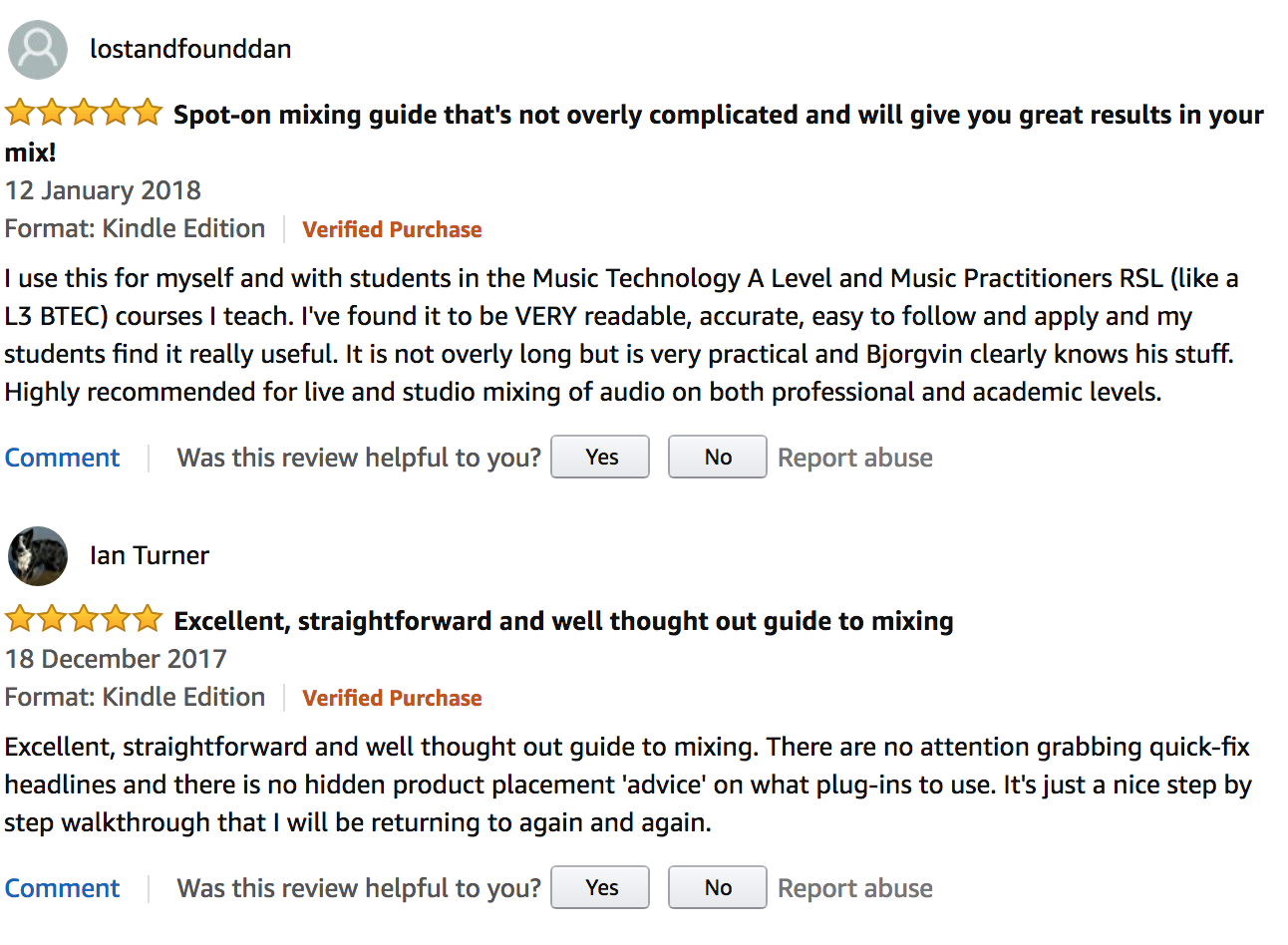
then maybe you need my Step By Step Mixing guide.
I
was browsing the U.K. Amazon reviews recently and turns out it's being used in classrooms to teach Music Technology! Check it out: