Here's one method for recording rock
vocals I learned one year at the AES conference.
The traditional method is recording the singer really close to the microphone to get an up-front sound.
However, sometimes that doesn't always work in the context of the genre you're recording in.
The Disadvantage of Recording Too Close
For instance, when you listen to a live
rock vocal, it isn't always up close and personal and in your face. You're hearing the vocalist blending in with the rest of the band. The FOH engineer doesn't mix the vocals so that the singer sounds like they're screaming in your ear. It doesn't sound glued on top. It sits with the rest of the mix.
Similarly, when you listen to rock music on your speakers, you don’t put your ears up to your monitors and hear the vocal from two inches
away.
No, you hear the vocal blend in with the band.
So is it any wonder that your vocals sound dry and glued on top of the rest of the music if you recorded it that way from the start?
If you record up close and personal, then that’s how it will sound. It will sound tacked onto the mix, and you’ll struggle to get it to fit with the rest of the mix. You'll pull the
fader up, and it'll be too loud. You'll pull the fader down, and it'll disappear.
It’s so much easier to mix a vocal when you record it with the mix in mind.
Record With the Mix in Mind
Next time, experiment a bit with the distance between the vocal mic and the vocalist. Especially if you're recording aggressive hardcore vocals that need to blend in with the edgy
guitars and explosive drums.
You might be surprised that when you add it into the mix, it automatically blends itself with the music.
You don't always have to focus on the perfect technicalities of the engineering as much as the naturalness of the performance. Just capture the best possible performance. The listener won't care about the technicalities if the performance is great and the recordings sound
good.
Record Killer Vocals that Blow Your Listeners Away
The vocals are the most critical part of any non-instrumental song (thank you Captain Obvious!). So, it's not surprising that Jordan's Hardcore Tracking course has an entire module devoted to
the subject.
Here's what you'll learn from his vocal training:
- Choosing the right vocal mic and mic technique for different types
- The simple vocal chain that will work on every project you take
- Vocal preamp and compressor setup
- How to get killer vocal takes - listening for pitch vs. timing and getting the best out of a singer
- How to track scream vocals and the differences between recording screaming and singing
- The
‘Comp-on-the-Fly’ vocal tracking strategy— track great vocals quickly, kiss the hours of comping goodbye, and never worry again about wasting the time or energy of the vocalist
- Lay down polished vocal layers, doubles and harmonies
- How to hear the vocals ‘close to finished’ in the studio with a 5-minute mix
- Final cleanup and editing to prep for the mix, whether you’re mixing yourself or sending it off
That's in addition to all the other specific techniques for drums, bass, and guitars.
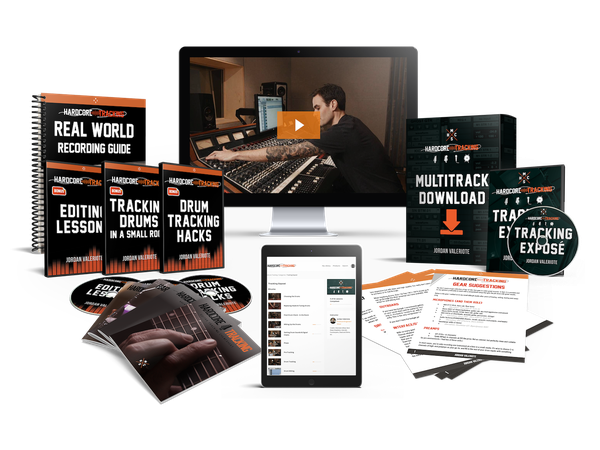
The Entire Tracking Package
You'll also get:
- “Tracking
Exposé” - The entire recording process captured on video with explanations of every step along the way. It covers not only recording techniques and workflow but teaches instrument setup, tuning, editing on the fly and how to achieve the tightest performances.
- “Real World Recording” - A written guidebook that gives foundational info about mic theory, mic technique, signal flow, gain staging, tracking strategies for
each instrument, room treatment and an overall approach to recording. Also includes suggestions for what gear you should own in a small or project studio.
- Tracking Cheatsheets - Quick reference sheets for each instrument with go-to mics and positions, instrument setup and tuning tips, and bullet points on tracking strategy
- Multitrack Downloads - Hear the
actual raw sounds captured in the videos in your own DAW. These tracks help illustrate what good recording levels are, and what a good raw tone sounds like during tracking. Also useful for mix practice.
No online course is complete without some juicy bonuses as well! Here's what he's included inside the course for free:
- Editing Videos & Lessons - Watch and learn as I edit
the drums and tune the vocals for “Exposé.” No mysteries about how the raw takes become the final takes.
- Bonus Lesson: How to track drums in a small room and optimize small spaces.
- Bonus Lesson: Drum tracking tricks and hacks for when the drummer can’t pull it off
Last Chance for $793.97 Worth of Bonus
Tutorials
My 48-hour bonus offer of the Complete Audio Issues Tutorial bundle expires TONIGHT, so if you'd like to get almost $800 worth of free bonuses, you only have a little bit of time left.
Here's what's included in the Complete Audio Issues
Bundle.
If you'd like to have your songs sounding better during tracking than most people’s final mixes sound… and get this result every time regardless of what client comes through your door (even if they can’t play what they wrote), then Hardcore Tracking is for you.
Remember to join today through my link so you can get all of my free bonuses as well.
Here's where you go to start recording your best recordings ever, straight at the source.
Enjoy!
P.S