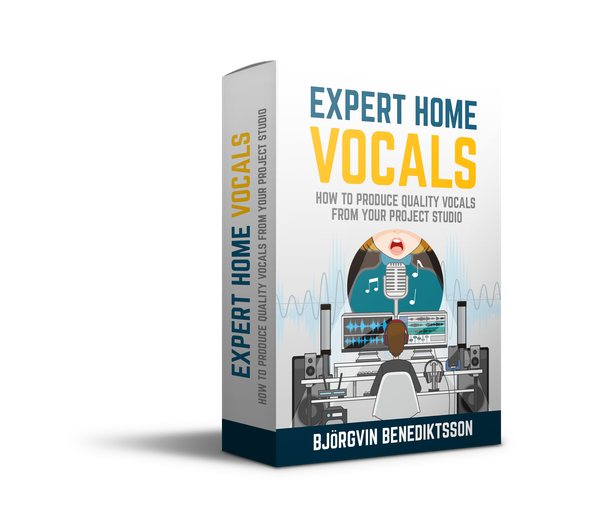
We're coming down to the wire for the 40% discount on Expert Home Vocals, so I wanted to make sure you had one last chance to take advantage of it.
How would you feel if you could take your vocals to the next level?
To become completely fluent in tracking vocals?
To know exactly how to use EQ, compression, reverb, and delay to make them sound like they came from a big-budget studio?
Just imagine when you get your vocals to sit well with the instruments so that when you release your songs you can be proud of how much they sound like the commercial records you compare them to.
Well...with Expert Home Vocals you can, and the good news is that this 40% discount offer is still open for about 2 more hours.
It's time to make a decision, and there are various packages available, so check out the packages you can get here.
In case you're wondering what you'll learn from the course, here is a quick rundown on everything that you learn inside Expert Home Vocals:
Effective Vocal Pre-Production to Make the Best Song Possible
- The gear junkies told you that you needed a $1,000+ microphone if you EVER wanted to record professional vocals? WRONG! Learn how to stop worrying about high-end mics and start using the one you already have to easily get solid, quality vocals
- Many musicians feel like their vocals sound distant and thin. This simple mic techniques will work every time to give you a full-bodied and balanced vocal sound
- What The Beatles can teach you about pre-production when you haven't quite nailed the lyrics yet. (You can literally sing gibberish to transform a melody that doesn’t work into a great production that captures the listener)
- How to create interest with harmonies and counter melodies to keep the listener interested and engaged throughout your production
- How to get a great vocal performance from a singer, even if they’re insecure and anxious about recording their voice
- What your singer should never do if you’re EVER going to get a great performance (You'll waste money, time and respect if you ignore this #1 rule of recording)
- How to communicate with your singer about the vices they need to avoid if you want them to perform at the top of their abilities
Getting Your Home Studio Ready and Making Your Singer Comfortable
- Many pop productions are recorded on the road, in noisy hotel rooms on tour. Learn the .two crucial techniques to reduce background noise and unwanted reflections in your vocal sound that the pro vocalists use when they need to nail that vocal now!
- The single most overlooked method for making your room vibe so the singer doesn’t feel like they’re recording in a stale office or a boring bedroom
- The reverb and parallel compression technique for a good headphone mix so your singer gives you their best performance, making them feel like they’re recording a finished track instead of an amateur demo
- Simple tips on making first-time singers feel more comfortable...and how to coax a great performance out of an inexperienced studio musician by making them feel more confident
- Why the Red Hot Chili Peppers used this inexpensive dynamic mic for vocals when they had the budget for any microphone in the world
- How to use your microphone’s bass roll-off to remove low-end rumble, control low-end overload and remove unwanted pop noises.
- How to use a pad to avoid clipping and obnoxious digital distortion that can destroy your vocal sound
- A nerdy way to find the right mic for your singer by analyzing its frequency response, making it easier to EQ and fit into the mix from the start
- How to use the right vocal mic technique to avoid sibilance and plosives with just a piece of cloth
- The two techniques to control your breath sounds during recording so you don't need to do as much editing to remove unwanted inhales and exhales in between phrases
- Why some singers are one-take wonders and others need more time and how that’s fine and you shouldn’t be afraid of doing punch-ins and multiple takes
- The essential equipment you need to record professional vocals, even if you don’t have a huge budget or a pro studio
Easy Recording Techniques to Get a Great Vocal Sound Right at the Source
- How to use microphone polar patterns to get the best vocal sound in your project studio, whether you’re recording one singer, a duet or a vocal group
- Simple mic placement techniques to get a good sound right away
- How to use mic positioning to help the singer reach higher notes by making them unconsciously open up their diaphragm to give you a better performance
- Important things you need to keep in mind to get the perfect mic placement for your vocalist
- How to use your pop filter as a target to keep your singer in the right spot for the best vocal sound, especially if your microphone placement feels weird, but sounds good
- An alternative way to record vocals that can instantly fit them in the mix
- The disadvantages of recording your vocals too close to the microphone
- How to find the right levels to record your vocals into your computer through your interface; the silver lining in digital audio recording and why you don’t have to worry about recording too low to the noise floor, or recording too loud to distort
- How to handle really loud, screaming rock singers that may distort your microphone, give you annoying digital clipping and overload your interface
- Great starting points for compressing your vocal sound on the way in. As much as you’re scared of committing to a compressed sound you can’t take back, you can follow these guidelines without ruining your vocal sound
- How to record live in a loud room when there are multiple instruments playing at the same time without worrying about bleed because additional mics will add depth to your recordings instead of ruining them
- The downside of using sensitive condenser microphones during a live recording session, and what type of mic and polar pattern you should use instead
- How to get an incredible master performance by using multiple takes to get the best final vocal from your singer
- How to use leftover takes to make tight doubles that make your lead vocals much stronger and adds professional depth to your vocal sound
- An alternative way to double vocals by using two microphones at the same time that not only gives you a perfect double, but also some ambience and space
- Advanced techniques for recording multiple singers at the same time, such as using the polar patterns to record tight duets or big punk rock group vocals
- How to use stereo microphone techniques to record vocal ensembles and choirs
How to Comp, Edit, and Tune Vocals for a Larger-Than-Life Vocal Track
- The four crucial things to keep in mind when comping vocals so you end up with a perfect composite that sounds better than any individual take
- Why crying is the best indicator of which vocal take gives you the best emotional impact to move the listener
- The important but overlooked aspect of editing your vocals that you need to do if you ever want to achieve a produced vocal sound
- Why attention to detail is a must when editing breaths and adding fades to your vocal takes
- How to edit your vocals so that they cut through the mix consistently throughout the track and don’t get lost in busier parts of the arrangement...so that you create a more uniform and balanced vocal performance that reacts better to compression
- How to edit doubles so that they’re as tight as possible using your DAWs elastic audio capabilities
- How to use pitch correction without making your vocalist sound like a robot
- Why “Perfect Pitch” isn’t always the best way to tune your vocals because it will affect the vocal delivery of the performance
- How to analyze the phrasing in-between notes for accurately tuning your vocals so that they sound natural
- How to tune sustained notes so that they sound more powerful and have a bigger impact on your listener
- How to mix your music and what workflow to follow for your instruments before you add in your vocals
- Why mixing the vocals during the busiest part of the song can help you make them fit better with the instruments
- How to get the vocals to sit in the mix and stay present while feeling balanced with the rest of the instruments.
- How to “mult” vocals if your arrangement requires separate vocal processing in different sections of the song
How to Mix Pro Vocals That Fit With All the Instruments in Your Mix
- Surprising and counter-intuitive panning guidelines for lead vocals, doubled lead vocals, and harmonies. My students never even thought about using these at first, but they are getting great results after trying them out
- How to get a rough mix before you focus on the vocals by building your mix so that your vocals can fit into it from the start
- How to apply EQ, compression and other plug-ins in the right order to get the vocal sound you’re looking for without abusing the vocals, causing them to lose all emotion and crispness
- The one video you need to watch if you want to create powerful vocals that cut through the mix with EQ...tighten up the low-end, eliminate boominess...and add thickness and weight to your vocal sound
- How to get rid of honkiness that sounds like the vocalist is singing with their hands over their mouths
- If you've ever felt like your singer sounds like he has a cold, even if they recorded in perfect health, you're going to love this EQ technique to get rid of nasal sounding vocals
- The exact frequency areas where you can add presence and punch to your vocal mix, eliminate sibilance, and use masking EQ to hide problematic frequency areas that won't leave your vocals alone
- How to find where the instruments are clashing with the vocals so you can use EQ to create pockets for the vocals to fit with the rest of your mix
- The reverse-EQ method my students love that helps them find the exact frequency and instrument that’s clashing with the vocal sound so that you can make more room for your vocals in your mix
- How to EQ backup vocals to keep them out of the way of the lead vocals
- Why separation in your vocals isn’t always the right move and what to do when you want a bigger “wall of vocal sound”
- Why you should not start compressing your vocals before you do this one very overlooked technique to make your compressor react more musically to every vocal phrase
- How to use compression on vocals to get a smoother sound that cuts through the mix without feeling like it’s tacked on top
- A walkthrough of the three most common compression styles and how they can change your vocal sound
- My favorite (and simplest!) vocal compressor I use on every single vocal track.
- How to use compression to tame your vocals so that the louder parts sound laid back and the quieter parts are audible, so that you can get fat sounding and properly compressed vocals that don’t muddy up the rest of the mix.
- The difference between aggressive compression and subtle continuous compression and how it changes your vocal sound
- How to use serial compression on your vocals to tame the peaks of your transients while increasing the overall level, resulting in a present and punchy vocal sound that cuts through the mix
- How to know whether you should use compression before or after EQ to get the best vocal sound
- The four reasons you may need a de-esser on your vocal track and why you may need more than one depending on how aggressive your vocal processing is...and my go-to setting for de-essing vocals without crippling the high-end
- The go-to method for EQ’ing and compressing backup vocals to fit with the lead vocals in a mix
- How to use parallel compression to make your vocals sound big and powerful
- How to use multi-band compression to zero in on problematic frequency areas that are making your vocals sound boxy, honky, or sibilant
- My three-bus effects chain I use for every vocal mix to add depth, space, width, and punch to my vocals. These three effects busses are permanently in my mix template because I use them on every single vocal track to make my vocals sound larger than life
- How to create automatic double tracking to make your vocals sound doubled if you don’t have a real-life double
- Why it’s a good idea to have a separate bus just for your vocal reverbs and delays so that you can process them differently than the rest of your instruments
- How to make your vocals REALLY WIDE
- Two effective ways to use saturation on vocals to create a little bit of warmth or grit
- Why you shouldn’t be afraid of experimenting with amp simulators and distortion on your vocals to make them stand out in a mix
- A step-by-step workflow for fitting your vocals into the mix, that helps you cut your instruments with EQ in a busy mix so that you can make the vocals fit with plenty of space without making the rest of your mix sound weak
- The three things I automate on vocals after I'm 95% done with the mix to make the vocals sound dynamic and "alive" with the rest of the mix
Ready to Start Producing Expert Sounding Vocals From Your Home Studio, Even if You Don't Have Fancy Equipment or a Confident Vocalist?
Discount Ends TONIGHT so hit the link to join now.
|
|
|