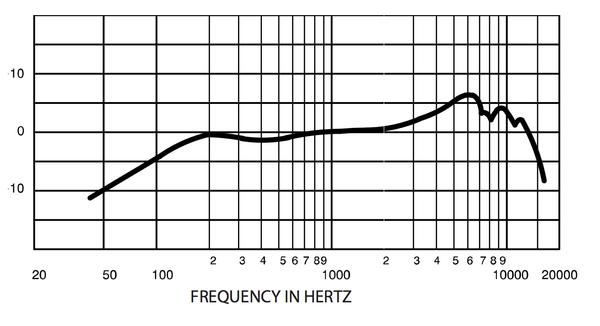
Of course, this added high-mid boost is great for live situations when you want something to cut through the mix, and possibly the reason why the Sm57 is such a popular mic. That 5 kHz present boost really comes in handy when cutting through a PA!
However, if you're stuck using it as a vocal mic in a studio situation, it might not be ideal - especially if your voice has a natural edginess to it. In that case, those beneficial boosts in the mids could be overkill.
As engineers, we have a tendency to reach for the high-mid boost to get tracks to cut through, so it feels like a "bad" move to cut those frequencies. Especially when you're EQ'ing something as important as the vocal. By knowing the frequency response of the mic, it will help you feel more confident when you're cutting the high-mids.
You won't feel like you're making a mistake because you're:
- Using your ears (the vocals sound harsh).
- Relying on the data (the mic has too big of a high-mids boost already for this voice).
So to get a warmer, smoother sound, you might just need to cut the high-mid harshness that's obscuring it.
If that's still not doing the job, another way to add some warmth to your vocals is through some subtle saturation.
I talk about all the ways you can make your home studio vocals sound professional inside the Expert Home Vocals course, so if you're trying to find more ways to make your vocals stand out, check out the Expert Home Vocals course here.