I'm working on an atmospheric folk track for a client right now.
Pedal steel, Dobro, two acoustic guitars, a bunch of vocals.
It's a lot of fun and with a sparse arrangement you get to experiment a lot with space in your mix.
However, I always strive to make sure everything can be heard clearly in a mix (it's what I teach you in my hour-long EQ walkthrough), but this time it was not what the client wanted.
When the
backup vocals came in on the second verse I tried to give each vocal part its respective space in both the EQ and stereo spectrum.
So I panned each backup vocal to the side of the lead vocal and did some EQ adjustments to make them poke out through the mix so they would complement the lead vocal.
I tried to make it sound
like the harmonies on the second verse of "Take It Easy" by The Eagles. You can very easily pinpoint each singer in that song because of the separation between the vocal tracks.
Turns out, this amount of separation was distracting to the client because it was too separate. He wanted more of a vocal blend that filled up the lead vocal instead of three separate vocal
tracks.
So here's what I ended up doing:
- I panned the backup vocals back into the center.
- I cut them from about 900 Hz - 3 kHz to make room for the lead vocal in the center.
- I added more reverb to them than the lead vocal to push them behind the lead track.
- I added some stereo spread to push them to the sides.
- I automated the volume so that the backup vocals wouldn't come in as strongly as the lead on the first syllables and
phrases.
That made the client happy and taught me a valuable lesson that I'm paying forward to you :)
Don't spend a lot of time going for what you think sounds the best because you might waste a lot of time mixing before you get feedback from your client.
It's sometimes better to just get a quality mix up and running quickly so that you can send the client the direction you're going in.
If it's the right direction, great! Keep going and take that mix from good to great.
If it's not, you've saved yourself a lot of time.
Instead of wasting time going in the wrong direction you can take the client's feedback and give them what they want instead.
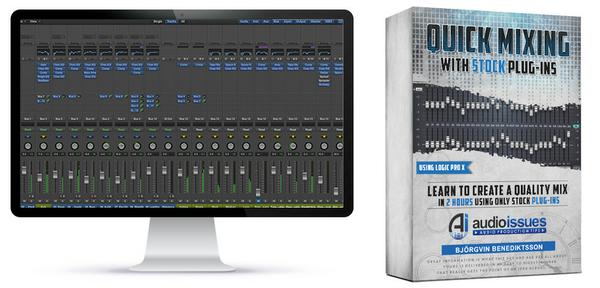
If you want help getting a quality mix up and running as quickly as possible check out my Quick Mixing series where I sit down with you for two hours and show you my techniques for getting a great mix going in as little time as possible, using only stock
plug-ins.
You'll learn my tricks on parallel routing for width, compression techniques for singer/songwriter style drums and using sub-bass to add warmth and thickness to your drum sound.
Check it out here:
www.QuickMixing.com