You'll like this handy EQ tip method I came up with the other day.
I used it on an electric keyboard track but the theory can be used for numerous tracks.
The goal is to filter out the lows, tame the muddiness and boxiness while adding slight masking via boosting to bring out
some of the mids to make the instrument cut through.
Step 1 - Filter
If it's not a bass instrument you're perfectly fine with filtering everything out below 100 Hz.
If you hear your mix clean up with more drastic filtering while you play this track in
context with the rest of the mix then keep going on the filter.
Just make sure it's not really thin in case it's a crucial part of the mix somewhere and you've accidentally taken all the weight out.
Step 2 - Shelving Cut
On instruments where low-mids
aren't the most important because...
- a) There are already enough low frequency instruments
- b) This track has problem with causing muddiness in the low-mids
...I like using a shelving cut instead of a bell cut.
It basically acts as a less aggressive filter.
Instead of taking all the frequencies out with the filter I'm reducing the energy from the filter cut-off frequency to the shelving cut frequency.
In this case the piano was getting in the way of the bass guitar and distorted electric
guitars in the 2-400 Hz area. This made everything sit a bit better but I still needed to give the keyboard its spot in the mix.
Step 3 - Masking Boost
I find keyboards sounding very nice when I boost them in the 500-700 Hz range. It's a mid-frequency range that seems to go unused but can work wonders to bring out certain
instruments in the mix.
Also try hunting around that area for:
- Roundness in the snare
- Harmonics in the bass guitar
- Character frequency for electric guitars (midway
between "weight" and "attack")
I just used a high Q on the shelving EQ to create a boost at the end of the shelving cut but you can easily use a separate bell boost if you need to go hunting any higher.
Results
This accomplishes three
things:
- Cleanup in the low region
- A controlled lower-mid range that doesn't clutter up the rest of the mix
- A place for the instrument to cut through
You can also
do this using a low-pass filter in case you have a full-range instrument that needs some cleanup in the highs and high-mids.
Say an crunchy electric guitar that sounds a bit hissy. Then you just filter out the highs, add a bit of shelving to tame the very high-mids and add a boost to make them cut through.
Try this tip out the next you
want a simple EQ approach that gives you very effective results.
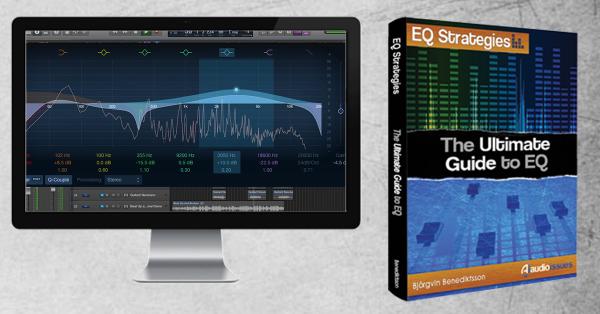
This is the kind of practical EQ advice I fill my EQ Strategies - Ultimate Guide to EQ with. I like making everything practical and easy to implement.
So if you need more ideas for EQ'ing your next mix, check out all the advice inside:
www.EQStrategies.net