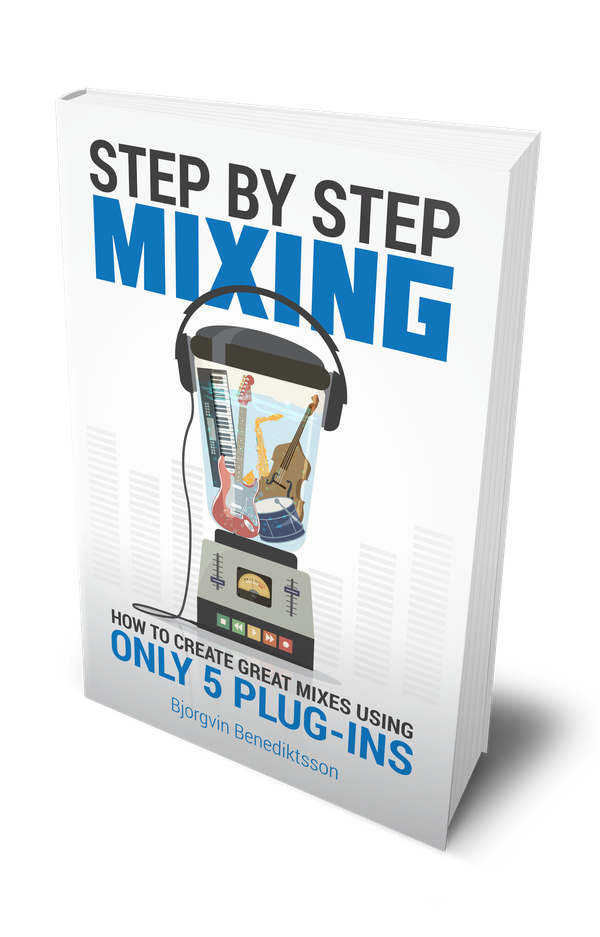
Click the image to download a high-res PDF. Please share it on Facebook or Twitter with anyone you think would appreciate it as well :)I referenced the final chapter of Step By Step Mixing: How to Create Great Mixes Using Only 5 Plug-ins when I was making this infographic. To elaborate even further on the translation process I wanted to give you a sneak peek into the part of the chapter where I break it all down for
you.
"Personally, my mix process is as follows:
- I mix in mono on my Behringer Behritone mixcube, mostly following the steps I’ve given you in the previous chapters. The Mixcube is a terrible speaker that has no low-end or highs. It has only one driver
and sounds pretty terrible. However, if I can make my mix sound halfway decent on this speaker I know I’m getting somewhere.
- I flip my mix over to my Yamaha HS-5s and do another round of tweaking. This is usually a rebalancing effort on EQ but I also flip my mix out of mono at this point. Now I
can hear the stereo spectrum pretty well. If I get a “whoa! That mix really opens up even though it wasn’t sounding bad before” I know I’m on the right track. I’ll spend some time on reverb, delays and other effects.
- Then I listen to my mix on my Focal CMS50s that are coupled with a subwoofer.
Now I can really hear all the little things in the mix, as well as all the low-end that’s present. Usually, this requires me to tweak the drums, kick, bass and other low-end instruments.
- Once I feel my mix is done I bounce it and upload it to Dropbox. I take the dog for a walk and listen to my mix multiple times on earbuds, making mental notes of what needs to be changed.
- I either tackle the
mix right away, or I sleep on it and come back to it with fresh ears. Throughout this process I tend to check the mix with a high-end pair of
headphones every so often to make sure nothing is screwy with the reverb and effects.
- Once I’ve done my revisions I usually get feedback from my studio partner before sending it to the client.
- If the client has any feedback I change the mix accordingly and send him the final mix.
Notice how many different pairs of both
speakers and individual ears the mix goes through before it’s done?
You don’t want to rely on one single monitor set up in one room to make your final mix decisions. You want to make sure your mix translates well everywhere the mix will be listened to."
If you enjoyed the Translation Sheet and check-list please grab the full eBook here. The 50% discount runs out tonight so take advantage of the low price while it
lasts.